Our Professional Learning Strategies

Our Program in Action

Our program was initially underpinned by five professional learning strategies that were implemented during the school’s calendar year. During the first phase of the CNS project, the schools, Aboriginal Cultural Mentors and the CNS team saw the need to expand the direct strategies to two more explicitly supported elements, namely: School Leadership and Student Voice.  

As we get underway with the Phase 2 in-school program and the research, we will update our Professional Learning to include a collaborative program with schools on Student Voice and School Leadership in addition to our ongoing support to roll out the five core professional learning strategies. We’ll be utilising and building on the learnings from our phase one rollout whilst keeping in mind the specific needs of each of the schools in our three-state model, and our other iterative elements of the phase 2 program. While the elements are largely the same in each school, we have adjusted where necessary. Below are summaries of each of our professional learning strategies, to outline how we work within the school and community. 

With the guidance of our pedagogical leads and research investigators, teachers and leaders from participating schools reflect, collaborate, plan and apply learning across four terms. The table below is an example of how our Professional Learning Strategies would be applied across the school year.  


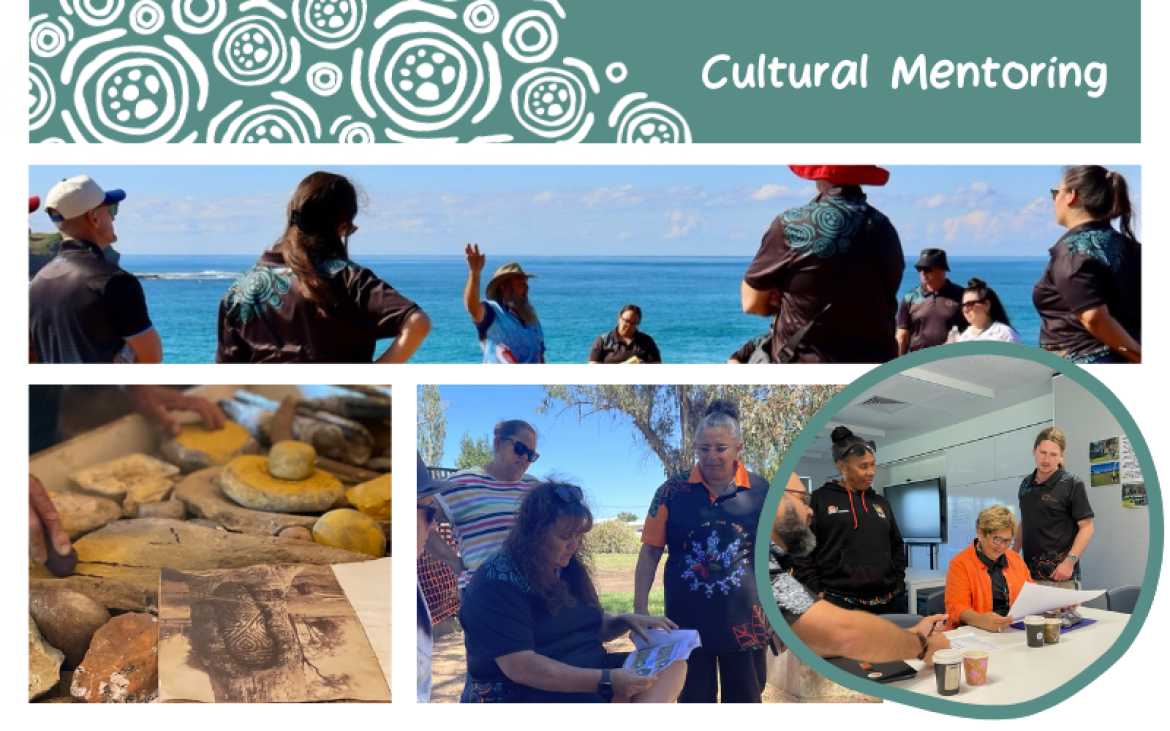
The aim of this strategy is to provide a Community voice. Cultural Mentoring sits at the centre of all professional learning strategies. It provides opportunities throughout the year for community voices, connections, truth-telling, stories and approaches to be shared. Teachers can learn from, with and about the local Aboriginal community.

How this works in schools:
  • Schools fund Cultural Mentoring through school resources, by employing new Community staff, or making arrangements with community members and Elders who support the professional learning.
  • Cultural Mentors work with teachers across all strategies.
  • Cultural Mentors are connected to the school and local community and help translate community aspirations for the education of Aboriginal students.
  • Many Cultural Mentors also sit on the cultural governance group – our Blak Caucus.
  • Research has identified the critical role that the Cultural Mentors had on the success of the project


Working with our Cultural Mentor means that we can get our knowledge from the source, rather than what someone else has written.


The aim of this strategy is for teachers to experience the local story from Elders, Community, and Cultural Mentors and for parents and the Aboriginal community to be assured that the work being done is appropriate and done with the interests of students and their families. This may include visiting important community sites, cultural experiences, truth-telling about the impacts of colonisation, and the experiences of education for local families. This strategy links with other CNS strategies as teachers continue to reflect on their experience over the year. It can have a significant impact on teachers’ understanding of their community and their students.  

This learning centres Country and foregrounds the importance of understanding learning in a place. As knowledges are shared and exchanged during these days (and beyond), leaders and teachers are encouraged and supported to take up opportunities to engage with community and learn more about the strengths and lives of their students, their families, and to think about Indigenous ways of knowing, being and doing.

How this works in schools:
  • 1-2 days Learning on Country – visiting key places in the community.
  • Cultural Mentors plan the days and share the history of the Aboriginal community.
  • Opportunities for teachers to connect with different services and community.
  • Opportunities for listening, quiet, questions and reflection at the end of the day.


It’s about incorporating deep knowledge and understanding about the community that you’re [working] in and showing deeper respect for them and what they’ve gone through in the past - laws and policies that have been put onto them and understanding where they’re coming from and how that could affect the families and their children that we are teaching.  So that we can come at it from a better perspective. 

Cultural Mentor, regional school


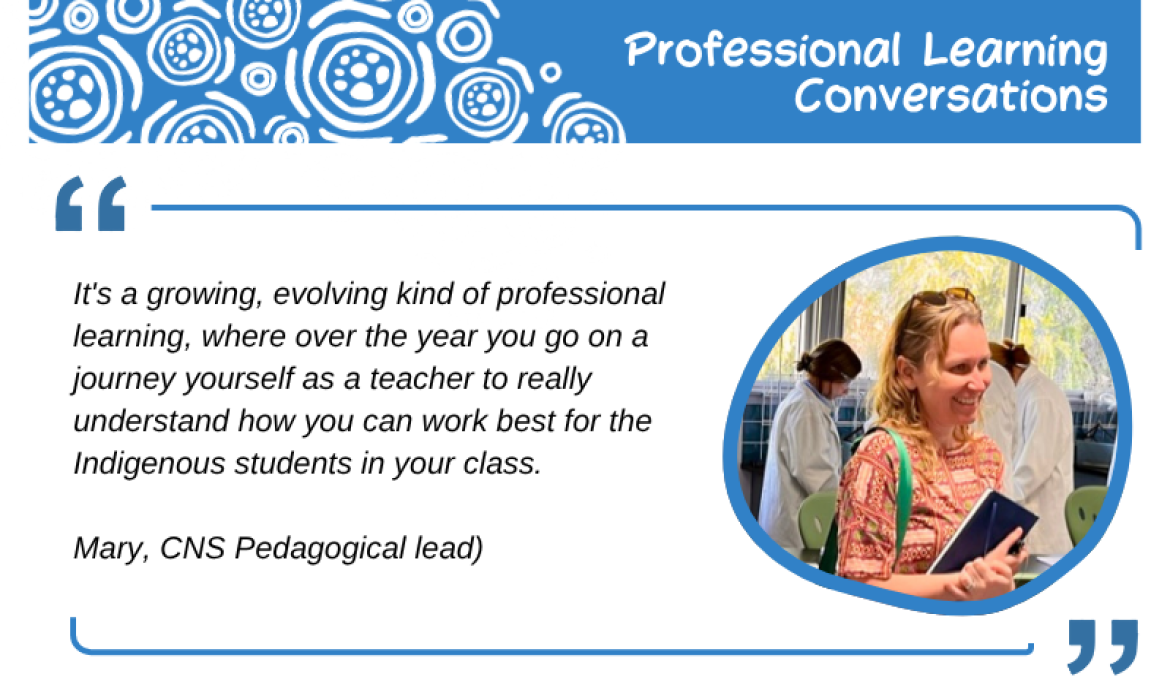
The aim of this strategy is for teachers to re-engage in the research literature that supports the work they are being introduced to. This strategy links with other CNS strategies as teachers self-reflect and consider how the literature prompts us to think differently about teaching and learning.  

Teachers, leaders, researchers and Cultural Mentors read research articles that focus on changing classroom pedagogy, localising curriculum, and ways for improving schooling for Aboriginal and Torres Strait Islander students. Following this, the group comes together for discussion and reflection - considering ideas, challenges and connections with their teaching practices and the local context. 

How this works in schools:
  • Teachers read 1-2 papers per term, a total of 4-6 across the year.
  • The group meet to discuss the paper for one hour. Discussions unpack understanding and teachers reflect on implications for their practice.
  • Led by the lead CNS researcher, CNS pedagogical leader or school leader.
  • Papers are selected by the CNS team.


It was interesting reflecting on how the default for so many teachers is based on our own culture, world-view and life experiences, which tend to be very Western and white and how that translates to our interpretation of the syllabus and subject content, and finally into the classroom. 

Teacher, remote school 


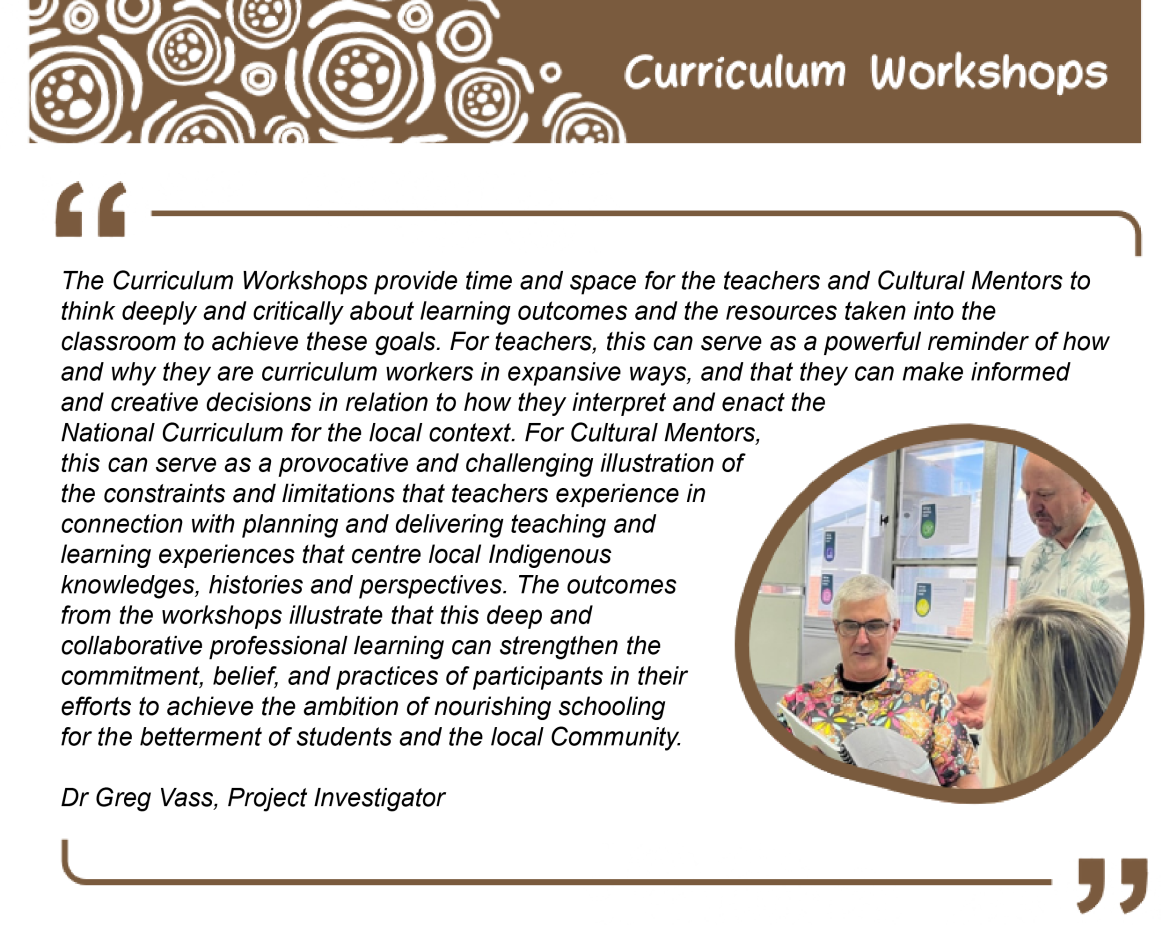
The aim of this strategy is to deepen teachers’ understanding of curriculum and their work as teachers of curriculum. This strategy links with other CNS strategies as teachers reflect on knowledges, Western influences of curriculum and consider Indigenous standpoint.  

This strategy provides opportunities for teachers to reflect on knowledges, programming rigor and choices, and consider Indigenous standpoint. They use conceptual tools, including Bloom’s cognitive dimensions, socio-political themes, and a relationally responsive standpoint. The Curriculum workshop follows the Learning from Country experience, and conceptual tools presented can be used to inform future curriculum planning.

How this works in schools:
  • 2-day workshop with teachers and Cultural Mentor 
  • Teachers use analytical frameworks to review and change a unit of work or plan a new unit. 
  • Cultural Mentor collaborates with teachers to provide expert advice on Aboriginal and Torres Strait Islander content and ways of thinking, being and doing in curriculum and pedagogical practices. 
  • It is facilitated by the CNS lead researcher or CNS pedagogical leader.


The things that need to be fore fronted [in the curriculum] are actually at the end… If we talk about needing a relational approach, and getting better at respecting and connecting, well then those Aboriginal perspectives need to be at the forefront of what we do… Every student would benefit from that kind of thing.

Teacher, urban school


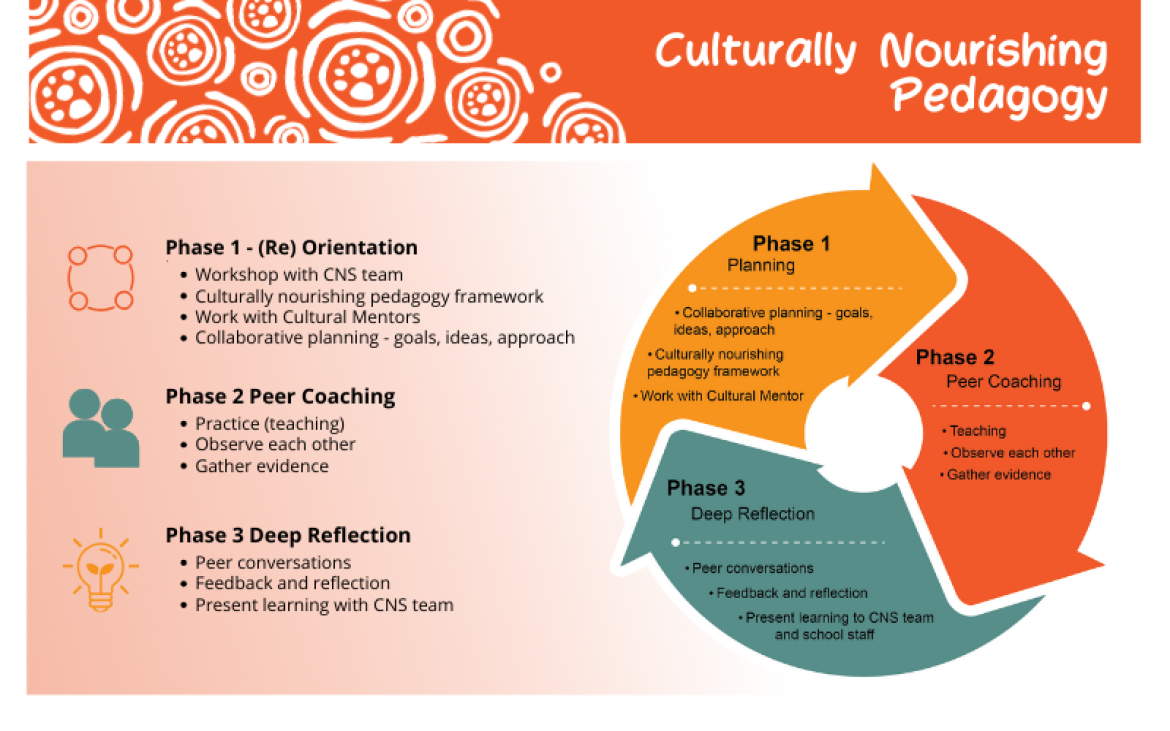
The aim of this strategy is to positively affect teaching practice through a cycle of planning, teaching, observing and reflecting. This strategy links with other CNS strategies as teachers draw on knowledge and experiences.

How this works in schools:

Teachers are guided to implement a range of changes in their teaching practice. Working alongside cultural mentors, teachers work together to plan and structure learning to suit the specific circumstances of each local school's context. This includes:

  • A workshop with teachers and Cultural Mentors that commences the cycle, and a reflection workshop that concludes the cycle.
  • Use of the CNS Pedagogic Framework – that supports teachers to think relationally about what and how content is taught.
  • Support from the CNS pedagogical leader.
  • Support from school staff during the cycle through peer coaching, lesson observations, sharing learning and providing feedback.


It’s about giving our Aboriginal students a voice about their own learning, what’s important to them and for us to understand that, and change our educational practices from there.

Teacher, regional school