

UNSW hosts its third annual symposium for this group of participating schools within the CNS program, with all schools recording positive outcomes as they come together to reflect, recharge and re-focus for the future.
After four years of dedicated research and practical application and with support from the CNS team, participating schools and their teaching staff, met at UNSW alongside their Cultural Mentors and the Blak Caucas, for the annual symposium for the CNS project. The week-long conference included presentations from all six participating schools;
Mattraville Sports High School
Alexandra Park Community School
Tweed River High School
Gilgandra High School
Condobolin Public School
Lake Cargelligo Central School
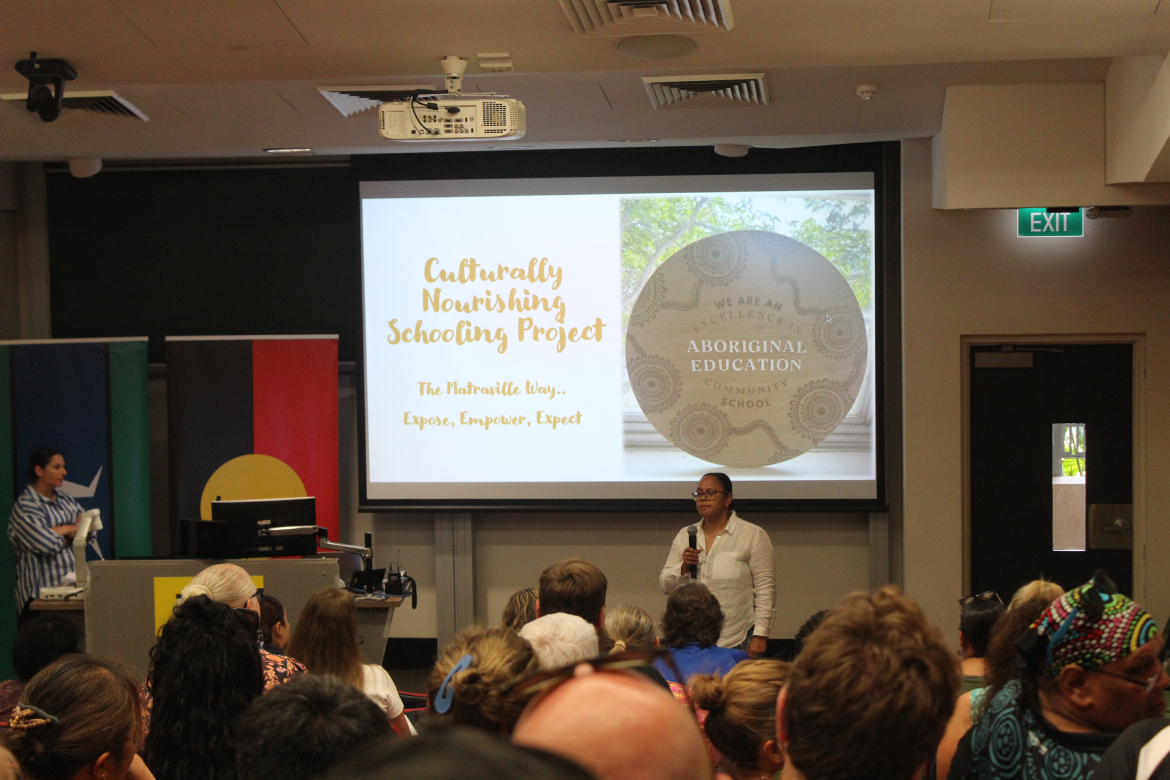
The schools documented how CNS has been reflected in their teaching methods and how the relationships between School, Community and Cultural Mentors have progressed for the benefit of their Aboriginal and Torres Strait Islander students over this time.
Alongside this, six international scholars were invited to present research from their own fields of study into culturally responsive education.
Professor Mere Anne Berryman ONZ & Jay Haydon-Howard, University of Waikato, NZ
Professor Angelina Castagno, Northern Arizona University, USA
Professor Muhammad Khalifa, Ohio State University, USA
Professor Django Paris, University of Washington, USA
Professor Emerita Christine Sleeter, California State University, USA

Cultural Mentors from each of the Schools and Community were given the opportunity to reflect on the past four years work through panel discussions and interactive workshop sessions with the wider group, which included teaching staff, and CNS project investigators and researchers.
Dr Keiko Bostwick, CNS’s quantitative postdoctoral research fellow has seen firsthand, the impact this program has had on the teachers involved, and their changing beliefs towards culturally responsive teaching, noting “we’re seeing that there are significant changes in the way teachers are motivated to teach Aboriginal perspectives in their curriculum.” She goes on to say “we’re seeing these really positive changes come out of the project even though every school and every community has a different way of approaching these issues.”
Connection and collaboration with each schools’ local Aboriginal Community, Elders and Cultural Mentors was at the heart of why all schools felt so empowered by the work that’s been done to date, showing just how impactful this shift to Community Guided Practices was for students and their families.
Cultural Mentor and Aboriginal Education Officer (AEO) Kimm Naden from Gilgandra High School, in North West regional NSW, reflected on the change she’s seen with her students through the program “because its embedded right across the school, and you have it in pockets of classrooms, its then reflective in the students behaviours, results, them attending school – that growth in our kids that we now see.”
The sentiment across the week was clear – there was a sense from all parties that the work was important, that the journey had been challenging but that the outcome was exactly what CNS had set out to achieve – a sustainable content program within schools that had deep and genuine cultural inclusion at the heart, with teachers and leaders who are confident in their ability to provide for their students.
Principal of Lake Cargelligo Central School, Eliza Cooper summed up the sentiment of the conference overall by stating “I think our Blak Caucus and hearing from other schools about the work that they’re doing, you can’t ignore that, and it ignites you – it’s been an awesome time to connect.”
International Speaker Prof. Muhamad Khalifa from Ohio State University was especially inspired by the responses he was hearing from the schools, noting one particular response from Shallan Foster, Head Teacher – Aboriginal Learning and Engagement at Matraville Sports High School “when Shallan said I’m not needed anymore to be at the helm because I’m developing a capacity; people who love system change, that’s music to their ears because what that means is that the train has left the station, and its going, it’s happening.”
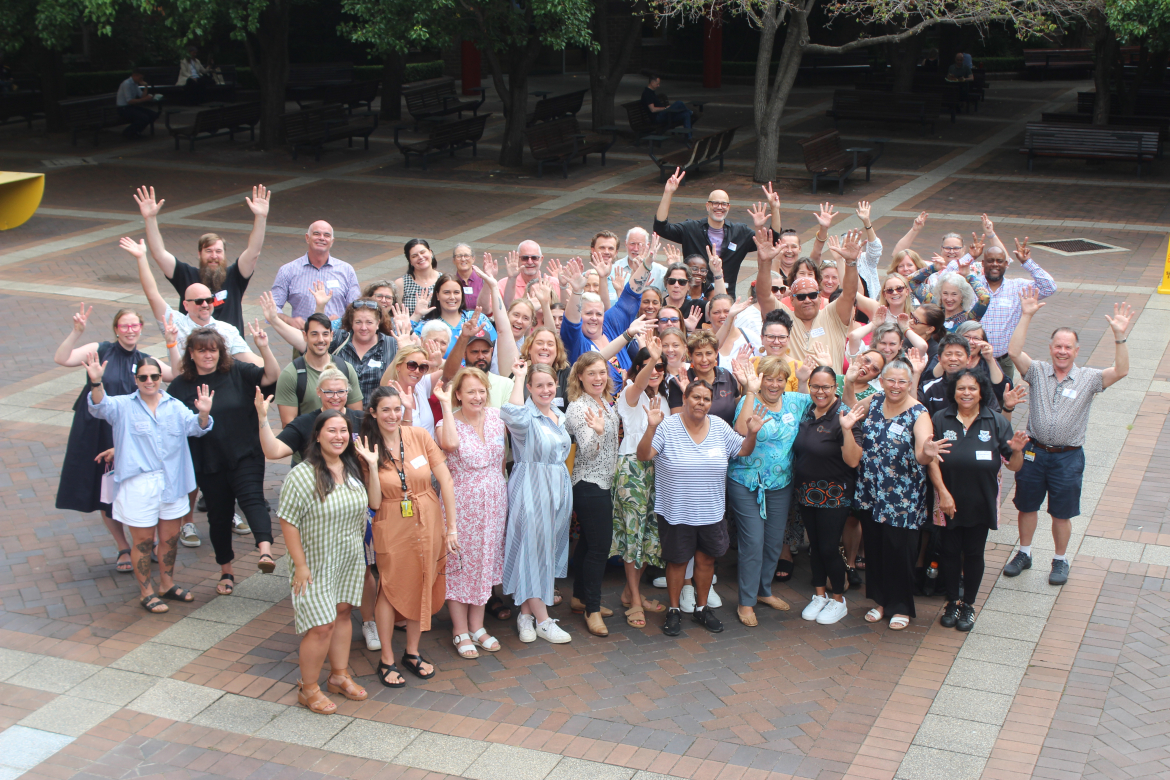
The passion for the project over these past four years was heard and felt across theroom and has been seen across the schoolyards and into the communities. This is certainly not the end of the collaboration between CNS and these schools, and certainly not the end of the project. A phase two will be commencing in 2025 with a roadmap looking to include interstate partners.